


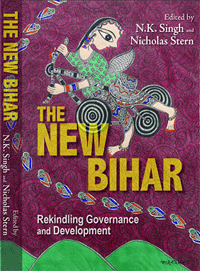
The New Bihar
- Released on:July 21, 2013
Bihar was at the heart of the first two all-India empires in history, that of the Mauryas and the Guptas. Justly famous for its institutions of learning, with universities at Vikramshila and Nalanda, it was also home to scholars like Kautilya, Aryabhata and Panini. However, the state went on a downward spiral after Independence and by the 1980s, it was at the bottom of the heap on all human development indices. After decades of stagnation and decline, the state has shown remarkable progress. Notorious for crime and violence, it has become relatively safe and secure. A state where development and growth were unheard of for decades is showing both in ample measure. Today, Bihar emerges as one of the best performers among all Indian states in recent years on many counts. In The New Bihar: Rekindling Governance and Development, N.K. Singh and Nicholas Stern have put together a perceptive collection of essays on the emerging Bihar model of development-its achievements, shortcomings, and the bumpy road ahead. While Amartya Sen provides a historical background of Bihar’s distinguished past, Kaushik Basu discusses the decline of Bihar in recent history and the turnaround since 2005. Meghnad Desai, Shankar Acharya and Arvind Virmani document how the state turned around to take a lead in terms of per capita GDP growth after 2005. Sudipto Mundle stresses the role of the strengthened fiscal situation in Bihar in explaining its strong performance. M.S. Swaminathan, Yoginder K. Alagh and Mangala Rai speak of the achievements and challenges in the agricultural sector, even as Isher Judge Ahluwalia argues for a high rate of urbanisation to take the development story of Bihar forward. Pavan Kumar Varma speaks of the cultural revival in Bihar, while George Yeo writes about the biggest example of Bihar’s cultural renaissance-the rebuilding of Nalanda University. Brimming with insights on governance as well as issues in various sectors of the state’s economy, The New Bihar is a must-read for economists, policymakers, administrators, politicians and students of political economy. There is a special emphasis on innovative and creative social change and restructuring, as represented by the Bihar Model, which has successfully combined inclusiveness with high growth. This book provides an in-depth account of the transformation by those who have been involved as actors and observers and who combine a careful analytical approach with close knowledge.